
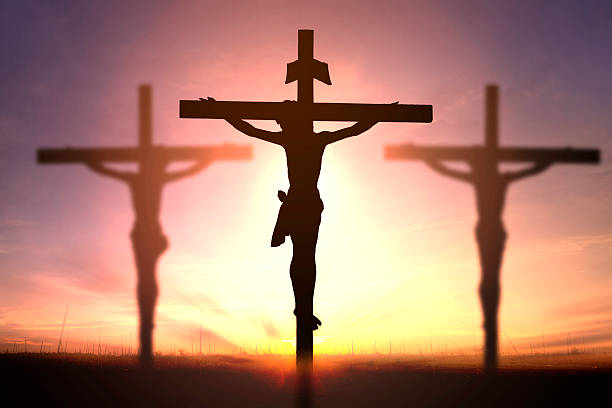
Discover the profound reason why Jesus Christ was crucified and how His sacrifice brings forgiveness, salvation, and eternal life. Learn the practical meaning of the cross for your daily life.
The Eternal Question of the Cross
1. The Most Pivotal Event in Human History
The crucifixion of Jesus Christ is not merely a tragic execution; it is the turning point of history, the very act upon which salvation and eternal life hinge. Without the cross, Christianity loses its foundation. But why was the Son of God crucified? Was it political manipulation? Religious jealousy? Or was it God’s divine plan of redemption from the very beginning?
Scripture answers this question with layers of meaning—legal, spiritual, historical, and eternal. Let us explore deeply.
2. The Sovereign Plan of God
From Genesis to Revelation, the cross was not an accident but God’s eternal design.
- Genesis 3:15: God foretold that the seed of the woman would crush the serpent’s head but would Himself be wounded—an early prophecy of Christ’s suffering.
- Isaiah 53:5: “He was wounded for our transgressions, He was bruised for our iniquities…” clearly pointing to substitutionary suffering.
- Acts 2:23: Peter declared that Jesus was “delivered by the determinate counsel and foreknowledge of God.”
👉 Meaning: Jesus was crucified because God willed to reconcile humanity to Himself through sacrifice.
3. The Legal and Religious Dimension
The earthly cause of Jesus’ crucifixion was false accusation and religious rejection:
- John 11:50: Caiaphas, the high priest, argued that “it is better for one man to die for the people.”
- Matthew 26:59-60: False witnesses testified against Him, yet He remained silent.
- Mark 15:15: Pilate, though declaring Him innocent, delivered Him to be crucified to appease the crowd.
👉 The Jews condemned Him for blasphemy (claiming equality with God), while the Romans crucified Him as a political threat—“King of the Jews.”
But behind these human actions lay divine justice: Christ bore the punishment of sin, becoming the Lamb of God (John 1:29).
4. The Theological Foundation – Atonement
Why crucifixion? Because without the shedding of blood there is no forgiveness of sins (Hebrews 9:22).
- Greek Word Study: The word hilastērion (ἱλαστήριον) means “propitiation,” the satisfaction of divine wrath. Jesus’ death satisfied God’s holiness and justice.
- Hebrew Connection: The term kippur (כִּפֻּר) from the Day of Atonement foreshadows Christ’s ultimate sacrifice.
👉 The crucifixion was not random; it fulfilled centuries of sacrificial foreshadowing, from Passover lambs to temple offerings, all pointing to Christ.
5. The Universal Purpose – For All Humanity
- John 3:16: “For God so loved the world, that He gave His only begotten Son…”
- Romans 5:8: “God demonstrates His love for us in that while we were still sinners, Christ died for us.”
- 1 John 2:2: “He is the atoning sacrifice… for the sins of the whole world.”
👉 Christ was crucified because God’s love demanded redemption for all people—Jews, Gentiles, rich, poor, slave, free, men, and women.
6. Practical Reflection
What does this mean for us today?
- Forgiveness is available – no sin is too great to be washed by Christ’s blood.
- Guilt is removed – He bore the punishment so we may walk in freedom.
- Love is demonstrated – The cross reveals the depth of God’s love for humanity.
- Salvation is secured – Eternal life is guaranteed through faith in His finished work.
Without the crucifixion, there is no resurrection. Without the cross, there is no crown. Without Jesus’ death, there is no eternal life.
Jesus Christ was crucified not only because of human schemes and religious envy but ultimately because of God’s eternal plan of salvation. His crucifixion satisfied divine justice, fulfilled prophecy, and opened the way of forgiveness for all who believe.
The Spiritual Dimensions of the Cross
1. The Weight of Sin and the Necessity of the Cross
The crucifixion cannot be understood without first grasping the seriousness of sin. Sin is not just a moral mistake—it is rebellion against the holy God.
- Romans 3:23: “For all have sinned, and come short of the glory of God.”
- Ezekiel 18:4: “The soul that sinneth, it shall die.”
From Genesis, sin entered the world through Adam, bringing death, curse, and separation from God. No amount of human effort—religion, philosophy, or good works—could erase sin’s stain. The cross was the only solution.
2. Substitutionary Sacrifice
The Bible teaches the principle of substitution: an innocent one dies in the place of the guilty.
- Greek Word Study: antilutron (ἀντίλυτρον) – “ransom in place of another” (1 Timothy 2:6).
- Hebrew Word Study: pesach (פֶּסַח) – “Passover,” where the lamb’s blood spared Israel from judgment (Exodus 12).
Jesus Christ became the final Passover Lamb. His crucifixion was not symbolic—it was substitutionary:
- He took our guilt,
- He bore our punishment,
- He endured our shame,
so that we might receive His righteousness (2 Corinthians 5:21).
3. Defeat of Satan and the Powers of Darkness
Another spiritual dimension of the cross is the victory over Satan.
- Colossians 2:15: “Having spoiled principalities and powers, He made a public spectacle of them, triumphing over them by the cross.”
- Hebrews 2:14: Jesus, through death, destroyed “him that had the power of death, that is, the devil.”
👉 The crucifixion looked like defeat, but in reality, it was the decisive victory. Satan’s accusations lost their power because Jesus paid the full penalty for sin.
4. The Justice and Mercy of God
The cross is where God’s justice and mercy meet.
- Justice demanded punishment for sin.
- Mercy desired forgiveness for sinners.
On the cross, God’s holiness was not compromised, and His love was fully expressed.
Romans 3:25-26 explains that God presented Jesus as a propitiation (hilastērion) to demonstrate His righteousness, so He could be both just and the justifier of the one who has faith in Jesus.
5. A Table: Dimensions of the Crucifixion
| Dimension | Biblical Basis | Practical Meaning for Us |
|---|---|---|
| Substitution | Isaiah 53:5 | Christ took my place. |
| Redemption | 1 Peter 1:18-19 | I am set free from slavery of sin. |
| Propitiation | Romans 3:25 | God’s wrath satisfied. |
| Reconciliation | 2 Corinthians 5:18 | Relationship with God restored. |
| Victory | Colossians 2:15 | Satan defeated, freedom secured. |
6. Practical Reflections – Living in the Power of the Cross
- Freedom from Guilt – You no longer need to live under condemnation (Romans 8:1).
- Victory over Sin – The same power that raised Jesus now enables believers to resist temptation.
- Hope in Suffering – Christ’s suffering gives meaning to our trials and offers us strength.
- Boldness in Prayer – Because of the cross, we have direct access to God (Hebrews 4:16).
- Call to Forgive – Just as Christ forgave us, we must forgive others (Ephesians 4:32).
7. A Deep Life Application
The crucifixion is not a distant event—it shapes every aspect of Christian life today.
- When guilt whispers, we answer with the blood of the cross.
- When temptation knocks, we rely on Christ’s victory.
- When fear of death arises, we remember that Jesus has conquered the grave.
The cross redefines our identity: we are no longer sinners under wrath but beloved children, forgiven, redeemed, and victorious in Christ.
Jesus was crucified not only to forgive sins but also to defeat Satan, satisfy divine justice, reconcile humanity to God, and transform believers’ daily lives. The cross is both an eternal transaction and a practical foundation for victorious Christian living.
Prophecy, History, and the Eternal Purpose
1. Crucifixion in God’s Eternal Plan
The crucifixion of Jesus Christ was not a tragic accident of history—it was the centerpiece of God’s eternal plan. Long before Roman crucifixion was even invented, the prophets had spoken of the Messiah’s suffering.
- Revelation 13:8 calls Jesus “the Lamb slain from the foundation of the world.”
- Isaiah 53:10: “Yet it pleased the LORD to bruise Him; He hath put Him to grief.”
👉 The cross shows that God’s plan for salvation was not Plan B, but Plan A since eternity.
2. Prophecies Fulfilled in the Crucifixion
The Old Testament contains hundreds of prophecies about the Messiah’s suffering. Jesus fulfilled them perfectly on the cross.
- Psalm 22:16-18: Hands and feet pierced, garments divided.
- Isaiah 53:5: “He was wounded for our transgressions.”
- Zechariah 12:10: “They shall look upon me whom they have pierced.”
Table – Selected Prophecies Fulfilled on the Cross

| Old Testament Prophecy | Fulfillment in Jesus | Reference |
|---|---|---|
| Betrayed for 30 pieces of silver | Judas’s betrayal | Zech. 11:12 → Matt. 26:15 |
| Hands and feet pierced | Crucifixion nails | Psalm 22:16 → John 20:25 |
| Mocked by enemies | Soldiers mocking | Psalm 22:7 → Matt. 27:39 |
| Cast lots for clothing | Soldiers gambling | Psalm 22:18 → John 19:24 |
| Given vinegar to drink | Sour wine on cross | Psalm 69:21 → John 19:29 |
👉 The crucifixion was the divine script written centuries before.
3. Historical and Cultural Context of Crucifixion
To grasp why Jesus was crucified, we must understand the Roman world:
- Roman Law: Crucifixion was reserved for the worst criminals, rebels, and slaves.
- Shame Factor: It was considered the most disgraceful death.
- Jewish Context: Deuteronomy 21:23 says, “Cursed is everyone who hangs on a tree.”
Thus, by dying on a cross:
- Jesus bore the curse of the law (Galatians 3:13).
- He entered the deepest human shame so we could be lifted to eternal glory.
4. Divine Justice, Human Rebellion
Why was crucifixion necessary? Because humanity’s rebellion demanded the full outpouring of God’s justice.
- Romans 6:23: “The wages of sin is death.”
- Hebrews 9:22: “Without shedding of blood is no remission.”
The blood of animals could not cleanse sin permanently (Hebrews 10:4).
Only the perfect blood of Christ could satisfy God’s justice and open the way for mercy.
5. The Cross and Its Global Impact
The crucifixion is not just a religious event—it shaped history, culture, and civilizations:
- Western Civilization – Concepts of forgiveness, mercy, and human dignity stem from the cross.
- Art & Literature – From Michelangelo’s paintings to Dostoevsky’s novels, the cross has inspired countless works.
- Human Rights – The idea that every person has value comes from the truth that Christ died for all (John 3:16).
- Personal Transformation – Millions testify that the cross gave them freedom from addiction, guilt, and fear.
6. Practical Lessons for Today
The crucifixion is not just ancient history—it is daily power for modern life.
- For the Guilty → There is forgiveness. (1 John 1:9)
- For the Addicted → There is deliverance. (John 8:36)
- For the Brokenhearted → There is healing. (Psalm 147:3)
- For the Fearful → There is hope. (Hebrews 2:15)
- For the Hopeless → There is eternal life. (John 3:16)
7. Common Questions About the Crucifixion
Q1: Why did Jesus have to die such a cruel death?
👉 Because sin is cruel, shameful, and deadly. The cross reflects the full cost of sin.
Q2: Couldn’t God forgive without the cross?
👉 No, because God is just. Forgiveness without payment would make Him unjust. Only the cross satisfied justice and extended mercy.
Q3: What does the crucifixion mean for me today?
👉 It means your sins are forgiven, your past is cleansed, and your future is secure in Christ.
8. Call to Transformation
The crucifixion is God’s loudest message:
- “I love you beyond measure.”
- “I will go to the lowest place to lift you to the highest heaven.”
Every time you see the cross, remember: it is not just a symbol of death—it is the door to eternal life.
The crucifixion of Jesus was the fulfillment of prophecy, the climax of history, the satisfaction of divine justice, the defeat of Satan, and the hope of humanity.
It unites heaven and earth, past and future, justice and mercy, suffering and glory.
👉 The question is not only “Why was Jesus crucified?” but also “What will you do with the crucified Savior?”
The Power of the Cross in the Human Heart
1. The Cross as God’s Love Letter
The crucifixion of Jesus is not just a historical tragedy—it is God’s love letter written in blood.
- John 3:16: “For God so loved the world, that He gave His only begotten Son…”
- At the cross, we see love and justice kiss each other (Psalm 85:10).
👉 The cross shows us that God was willing to go to the lowest depth of human pain to reach us.
2. Psychological and Emotional Impact of the Cross
The crucifixion also heals our inner struggles:
- Guilt: Many people carry lifelong guilt. But the cross shouts, “It is finished” (John 19:30).
- Shame: Jesus bore the shame of nakedness, mockery, and rejection, so we can walk in dignity.
- Fear: Hebrews 2:14-15 says Jesus’ death destroyed the one who held the power of death—so we need not live in fear.
- Loneliness: When Jesus cried, “My God, My God, why have You forsaken me?” (Matt. 27:46), He took our loneliness so we would never be abandoned.
👉 The cross is divine therapy for the human soul.
3. Social and Cultural Transformation
Wherever the message of the cross has gone, it has transformed societies:
- Slavery: The idea that all people are equal before God (Galatians 3:28) fueled movements against slavery.
- Compassion: Hospitals, orphanages, and schools were built in the name of Christ crucified.
- Justice: The cry for human rights is rooted in the belief that Christ died for all humanity.
👉 The crucifixion does not remain in the church pulpit—it spills over into culture, art, politics, and daily life.
4. The Cross as the Doorway to Forgiveness
Without the crucifixion, forgiveness would only be a dream.
- Colossians 2:14: “He canceled the record of the charges against us and took it away by nailing it to the cross.”
- Imagine every sin you’ve committed written on a board. At Calvary, Jesus erased it all.
Practical Example:
👉 A prisoner released after years of guilt may still feel condemned. But when he encounters the cross, he realizes his record is wiped clean in heaven’s court.
5. The Cross and Daily Christian Living
The crucifixion is not only the beginning of salvation—it is the blueprint for daily discipleship.
- Luke 9:23: “If anyone desires to come after Me, let him deny himself, and take up his cross daily, and follow Me.”
- The cross calls us to:
- Forgive others as we were forgiven.
- Serve sacrificially, not selfishly.
- Live humbly, not proudly.
- Love even our enemies.
👉 Every day, the believer carries the cross—not as a burden but as a reminder of freedom.
- When I look at the cross, do I see only suffering, or do I see my salvation?
- Am I still living under guilt that Jesus already paid for?
- How can I apply the forgiveness of the cross in my relationships today?
The crucifixion of Jesus Christ is more than an event—it is a living power that transforms guilt into peace, shame into dignity, fear into courage, and hatred into love.
👉 At the cross, history changes. But more importantly, hearts change.
👉 The question is not just, “Why was Jesus crucified?” but, “How will I live because He was crucified for me?”
Living Out the Power of the Cross
1. The Cross in Our Families
The crucifixion of Jesus is not only about salvation—it also teaches us how to build godly families.
- Forgiveness in Marriage: Just as Christ forgave us, spouses must forgive one another (Ephesians 4:32).
- Sacrificial Love: Husbands are called to love their wives “as Christ loved the church and gave Himself up for her” (Ephesians 5:25).
- Raising Children: Parents are urged to nurture children in the training of the Lord (Ephesians 6:4).
👉 A family shaped by the cross becomes a testimony of Christ’s love to the world.
2. The Cross in the Workplace
How can the crucifixion of Christ influence our jobs?
- Integrity: Because Jesus bore our sins on the cross (1 Peter 2:24), we must work honestly, without corruption.
- Service: Colossians 3:23 reminds us: “Whatever you do, work at it with all your heart, as working for the Lord.”
- Humility: The cross reminds us that greatness is found in serving others, not in power or status (Mark 10:45).
Practical Example:
👉 An employee who refuses to engage in bribery reflects the power of the cross by choosing righteousness over quick gain.
3. The Cross and Social Justice
The crucifixion of Jesus also compels us to stand against injustice.
- Isaiah 1:17: “Seek justice, correct oppression; bring justice to the fatherless, plead the widow’s cause.”
- The cross shows us that God values every soul equally, no matter their background.
- This means speaking out against exploitation, defending the weak, and promoting fairness.
👉 The blood of Christ was shed for every tribe, tongue, and nation (Revelation 5:9).
4. The Cross and Personal Transformation
When Jesus died, He not only opened heaven’s door but also changed us from the inside out.
- Romans 6:6: “Our old self was crucified with Him so that the body of sin might be destroyed.”
- Practical Results:
- A person addicted to anger finds peace.
- A greedy heart learns generosity.
- A fearful spirit becomes bold in Christ.
👉 The crucifixion is not theory—it is transformation.
5. Daily Applications of the Cross
| Life Area | Cross-Centered Application | Bible Verse |
|---|---|---|
| Relationships | Forgive and reconcile | Matthew 18:21–22 |
| Finances | Give generously, avoid greed | 2 Corinthians 9:7 |
| Health & Body | Honor God with purity | 1 Corinthians 6:19–20 |
| Trials & Suffering | Endure with hope | Romans 8:18 |
| Spiritual Growth | Die to self, live to Christ | Galatians 2:20 |
6. Reflection Questions
- How does the cross shape the way I treat my spouse, children, or friends?
- Do I allow the cross to guide my decisions at work and in finances?
- In what ways is the crucifixion transforming my character daily?
The crucifixion of Jesus Christ is not a distant memory—it is a living reality that touches our homes, jobs, relationships, and personal struggles.
👉 To follow the crucified Savior means to live crucified lives—marked by forgiveness, humility, love, and service.
👉 When believers live out the cross daily, the world sees a glimpse of heaven on earth.
The Transforming Power of the Cross in Daily Life
1. The Cross as a Daily Lifestyle, Not Just History
Many people view the crucifixion of Jesus Christ only as a past event. But in reality, the cross is a daily lifestyle. Jesus said in Luke 9:23:
“If anyone would come after Me, let him deny himself and take up his cross daily and follow Me.”
- This means the crucifixion is not only for Good Friday services—it is the foundation of Christian living every single day.
- To carry the cross means to say “No” to sin and “Yes” to God’s will, even when it hurts.
- The cross reminds us that true life begins when we die to our selfish desires (Galatians 2:20).
👉 Application: When you are tempted to respond with anger, remember the cross. Jesus forgave those who nailed Him; therefore, you can forgive the one who hurt you.
2. The Cross in Relationships
The crucifixion of Jesus reshapes how we relate to people:
- In Marriage: Ephesians 5:25 says, “Husbands, love your wives, as Christ loved the church and gave Himself up for her.” The cross teaches us to love sacrificially.
- In Friendships: John 15:13 declares, “Greater love has no one than this, that someone lay down his life for his friends.” True friendship is cross-shaped.
- In Enemies: Jesus prayed for His enemies on the cross: “Father, forgive them” (Luke 23:34). That sets the standard for us to love those who oppose us.
👉 Example: Imagine a family feud lasting years. When one person decides to forgive because of Christ’s example on the cross, healing begins.
3. The Cross in Work and Business
Christ’s crucifixion teaches us to live honestly, even in the workplace:
- Integrity: Because Jesus bore our sins (1 Peter 2:24), Christians cannot cheat or bribe.
- Humility: Philippians 2:8 shows Jesus humbled Himself to the point of death. At work, humility opens doors of influence.
- Service: Mark 10:45 reminds us that “the Son of Man came not to be served but to serve.”
👉 Example: A Christian businessperson refusing corruption, even at financial loss, reflects the cross more than thousands of sermons.
4. The Cross and Social Responsibility
Jesus’ crucifixion was also a cry for justice and compassion:
- Isaiah 58:6–7: True religion is to break chains of injustice and care for the poor.
- The cross reminds us that Christ suffered for all nations, races, and classes.
- Therefore, Christians must defend the voiceless, the oppressed, and the marginalized.
👉 Modern Application: Volunteering at shelters, helping widows, and supporting orphans are cross-centered actions.
5. Scriptural Depth – Greek & Hebrew Insights
Sometimes the richness of the cross comes alive in the original biblical languages:
| Word | Language | Meaning | Application |
|---|---|---|---|
| Stauros | Greek | “Cross, stake, instrument of execution” | Reminds us the cross was not jewelry but an instrument of shame and sacrifice. |
| Hilastērion | Greek | “Propitiation, atoning sacrifice” (Romans 3:25) | Jesus’ crucifixion satisfied God’s justice. |
| Kaphar | Hebrew | “To cover, to atone” | Foreshadows how Christ’s blood covers sin. |
| Shalom | Hebrew | “Peace, wholeness” | The cross restores peace between God and humanity. |
👉 Reflection: The more we understand these words, the deeper we see how the cross is God’s masterpiece of love and justice.
6. Personal Transformation through the Cross
The crucifixion is not only theology—it is transformation:
- From Fear to Courage: Peter denied Jesus, but after the cross and resurrection, he preached boldly (Acts 2:14).
- From Guilt to Forgiveness: Paul called himself the “chief of sinners” (1 Timothy 1:15), yet the cross turned him into a missionary.
- From Bondage to Freedom: Romans 6:6 declares that our old self was crucified with Christ.
👉 Application: Write down one sin or struggle in your life. Then pray: “Lord, I nail this to Your cross.” Believe that Jesus has broken its power.
7. Practical Table: Living the Cross Daily
| Area of Life | Challenge | Cross-Centered Response | Bible Reference |
|---|---|---|---|
| Marriage | Selfishness | Love sacrificially | Ephesians 5:25 |
| Finances | Greed | Give generously | 2 Corinthians 9:7 |
| Friendships | Betrayal | Forgive and reconcile | Matthew 18:21–22 |
| Work | Corruption | Walk in integrity | Colossians 3:23 |
| Suffering | Hopelessness | Endure with hope | Romans 8:18 |
8. Reflection Questions
- Do I carry my cross daily, or do I only think of the crucifixion at Easter?
- How can I apply Christ’s sacrifice to my marriage, work, and community life?
- What sin or struggle do I need to “nail to the cross” today?
- Do others see the power of the cross in how I live?
The crucifixion of Jesus Christ is not just a historical tragedy—it is the living power of God that changes everything.
- In our homes, it builds forgiveness and love.
- In our workplaces, it demands honesty and humility.
- In our communities, it calls for justice and compassion.
- In our hearts, it brings transformation and peace.
👉 To live the cross daily means to die to sin and rise to righteousness (Romans 6:11).
👉 Every believer is called to embody the crucifixion in words, actions, and choices.
When the world sees Christians living the cross—not just wearing it—they see Christ Himself.
The Eternal Message of the Cross
The crucifixion of Jesus Christ is not simply a historical event but the turning point of all human history. It was at the cross that the deepest questions of humanity—sin, justice, love, forgiveness, and eternal life—were answered once and for all. Jesus did not die as a victim of injustice alone; He died as the willing Savior who carried the weight of our sins upon His shoulders.
The cross demonstrates that:
- Sin is real and separates us from God.
- God’s justice demands a penalty for sin.
- God’s love is greater than our sin, shown through Christ’s sacrifice.
- Salvation is free for those who believe and accept Jesus as Lord and Savior.
Romans 5:8 reminds us: “But God demonstrates His own love for us in this: While we were still sinners, Christ died for us.”
This is the essence of Christianity—the Good News that no one is beyond redemption.
The message of the cross is not meant to remain only in theology books; it is designed to transform daily life. Ask yourself:
- Am I living in the freedom that Christ purchased for me?
- Do I forgive others as Christ forgave me?
- Am I sharing the Good News with those who are still searching for hope?
Today, you have a choice: to live under the burden of sin, or to walk in the freedom and eternal life that Jesus offers through His crucifixion and resurrection.
Take a step of faith today: Open your heart, confess your sins, believe in Jesus, and receive the eternal life He has promised.
May the message of the cross lead you to peace, freedom, and everlasting joy in Christ Jesus. May His sacrifice never lose its wonder in your life.